
The C Word
By Sheri Dixon
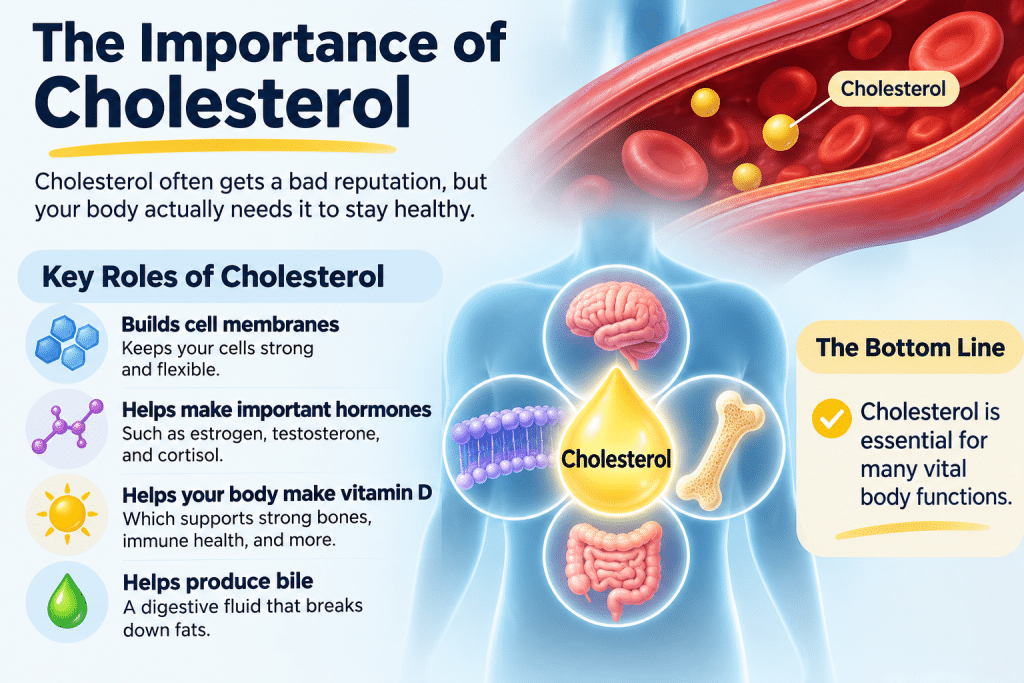
The Cholesterol Paradox
The mention of the word cholesterol can trigger images of blocked arteries, blood clots and strokes.
Yet cholesterol may not be to blame for the core issues linked to any of them.
Cholesterol may be the last addition that resulted in a diagnosis of atherosclerosis plaque that has likely developed over years. Of course atherosclerosis should not be overlooked, but at the same time there are some important factors about cholesterol that we must not ignore.
Mother nature teaches us that cholesterol is so important that if there is an insufficient
supply then the body will make up the shortfall on a supply and demand basis.
Approximately 15-18% of our cholesterol comes from dietary sources such as saturated fats. The rest is produced inside the body.
So the less cholesterol ingested, the more the body must produce.
Cholesterol is absolutely essential and is involved in many body functions.
Your body produces cholesterol daily because it is so important.
If you never ingest foods rich in cholesterol then your body will make up the shortfall.
Plaque attached to artery walls is a combination of substances such as fibrin, collagen proteins, triglycerides and minerals. Fibrin is a blood protein involved in clotting. Everything sticks to it, cholesterol last.
In the 1950’s, a small study was performed on rabbits. The results showed that cholesterol from animal fats raised cholesterol levels in rabbits. But rabbits are
vegetarians and do not ingest cholesterol in their natural diet which explains why
cholesterol increased in their blood stream. Human metabolism is quite different to rabbits.
Cholesterol helps to make vitamin D3 and anabolic (building) hormones such as
cortisol, testosterone, estrogen, progesterone. Hormones are needed to maintain good bone health and to prevent osteoporosis and cancer.
Pregnenolone, aka the grandmother hormone, is made from cholesterol and is a major nutrient for the brain, therefore supporting healthy cognitive function and protecting myelin. I think of myelin like the plastic coating protecting electric wires to appliances. Our brain cells connections are known as synapses. Good mental health suggests healthy synapses.
Cholesterol and saturated fats support healthy cell function and structure. Almost every cell produces cholesterol during our whole lifetime because every cell of every organ has cholesterol as a part of its structure.
As we age, we require an increased supply of many nutrients, yet the processes of ageing cause our natural levels to decline.
Avoiding dietary cholesterol and saturated fats by eating a low fat diet will not put you at a higher risk of degenerative diseases such as dementia, Parkinsons, diabetes, heart disease and osteoporosis because your liver will compensate for the shortfall.
However, taking statins to suppress the production of your natural cholesterol is altogether different, and may be linked to the increasing incidence of health challenges.
Human breast milk is rich in cholesterol. Mother’s milk provides a specific enzyme that enables the baby’s digestive tract to absorb almost 100 percent of that cholesterol, because the developing brain and eyes of an infant need large amounts. Children deprived of cholesterol in infancy may potentially suffer impaired eyesight later.
Apart from the brain, the adrenals and endocrine glands require cholesterol to accomplish many functions such as energy production, metabolism regulation, and mineral assimilation for example.
Stressful ‘on the go’ lives can sometimes lead to a condition referred to as adrenal exhaustion. One of the most importance measures for this is to check that dietary cholesterol is sufficient.
Without cholesterol we would not be able to reproduce because every sex hormone is required for human fertility. Dr. Jorge Chavarro, of Harvard School of Public Health, stated: “Women wanting to conceive should examine their diet. They should consider changing low-fat dairy foods for high-fat dairy foods, for instance by swapping skimmed milk for whole milk and eating cream, not low-fat yoghurt.”
Bile is made out of cholesterol. Without bile we would not be able to digest and absorb fats and fat-soluble vitamins, A, K, E and D.
Vitamin D is produced from cholesterol in our skin when it is exposed to sunlight. During dark Northern European winters we obtain vitamin D from cholesterol-rich foods such as cod liver, fish, shellfish, butter, and egg yolks. Fears of the sun and foods rich in cholesterol have served to create a surge in vitamin D deficiency. As we age, our ability to generate vitamin D from sunlight is reduced.
Studies have shown that immune cells rely on cholesterol in fighting infections and repairing themselves post sickness.
Early cholesterol studies noted that coenzyme Q10 should always be offered with statins but this crucial point regarding CQ10 was later omitted. Even if you supplemented with coenzyme Q10 you would need a carrier for it to be effective inside the cells.
Research has shown that people diagnosed with conditions such as heart disease, Parkinson’s and diabetes tend to have lower levels of coenzyme Q10, although it isn’t clear if the medical conditions caused the deficiency, or a deficiency contributed to developing the disease.
What is established is that the ageing process results in a gradual decline in coenzyme Q10 levels so we can start to correlate increases in the diagnosis of certain diseases with advancing age and the decline in CQ10 levels.
Age % Decline
20 100%
30 80%
40 70%
50 40%
60 23%
70 12%
80 10%
“In my clinic, I see growing numbers of people with memory loss who have been taking cholesterol- lowering pills.”
Dr. Duane Graveline, MD, former NASA scientist and astronaut, suffered such memory loss while taking statins but reversed his symptoms by ceasing the medication and consuming cholesterol rich foods in sufficient amounts.
He published: “Lipitor: Thief of Memory, Statin Drugs and the Misguided War on Cholesterol”
Refs:
The Great Cholesterol Con – by Malcolm Kendrick
The Cholesterol Myths – by Uffe Ravnskov
Strauss E. One-eyed animals implicate cholesterol in development. Science. 1998 Jun 5;280(5369):1528-9.
Chavarro JI and others. A prospective study of dairy foods intake and anovulatory infertility. Human Reproduction, Issue 28, Feb 2007.
Anticancer Res. 2006 Jul–Aug;26(4A):2723-7. Review; _Vitamin D and cancer._
(http://www.ncbi.nlm.nih.gov/entrez/query.fcgi?db=pubmed&cmd=Retrieve&dopt=AbstractPlus&list_uids=16886659)
Anticancer Res. 2006 Jul-Aug;26(4A):2515-24. Review; Epstein SS. Unreasonable risk. 2001. Published by Environmental Toxicology, PO Box 11170, Chicago, USA.
Pfohl M and others. Upregulation of cholesterol synthesis after acute myocardial infarction–is cholesterol a positive acute phase reactant? Atherosclerosis. 1999 Feb;142(2):389-93.
Natasha Campbell-McBride, MD, MMedSci “Cholesterol Friend or Foe”
Copyright © Sheri Dixon 2026 All Rights Reserved